Heat waves are becoming increasingly frequent and intense in Brazil and around the world. The phenomenon can occur in any season, in both the Southern and Northern Hemispheres, but it is particularly intense in spring and summer, when there is a natural increase in daily insolation, which is the number of hours of sunshine.
For decades, the increase in the frequency and intensity of heat waves, both in the atmosphere and in the ocean, has been one of the most recurrent warnings from the World Meteorological Organization (WMO) and the World Health Organization (WHO). The years 2024, 2023 and 2025 (in that order) were the warmest ever measured by modern science since the pre-industrial period (1850–1900). In 2024, for the first time, the Earth’s average global temperature — considering ocean and atmosphere — exceeded the 1.5°C safety warning threshold set by the Paris Agreement.
What is a heat wave and how is it characterized?
A heat wave — also called a heat dome — is a sequence of days or even weeks in which temperatures across a relatively large region stay well above the normal average for a given time of year. Although the literature is not entirely unanimous on the definition of a heat wave, the World Meteorological Organization considers that a heat wave is affecting a region when temperatures remain at least 5°C above the historical average for at least five consecutive days.
In addition to the rise in temperatures normally observed in the afternoon, a heat wave also brings more heat at night, which causes greater thermal stress.
How does a heat wave form?
Heat waves are generated by atmospheric blocking caused by large high-pressure systems. Atmospheric blocking is a stagnation of the normal movement of air caused by a high-pressure system that remains stationary, or almost stationary, in the same position for at least five consecutive days — and may last for weeks.
High-pressure areas are regions where air pressure is higher than in the surroundings. They cause a downward movement of air (from top to bottom) called subsidence. This movement compresses the air near the surface, making it heat up even more.
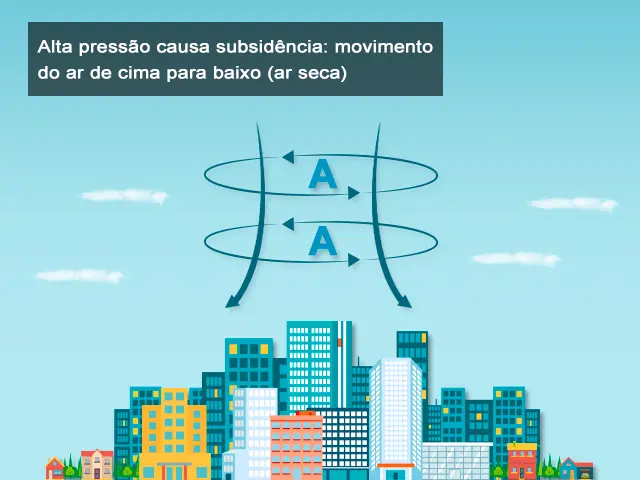
Subsidence also dries the air, reduces humidity and inhibits cloud formation, significantly lowering the chance of rain. That is why heat waves are usually associated with:
- skies with little cloud cover
- predominance of dry air
- low occurrence of rain
- strong solar radiation (very sunny days)
Atmospheric blocking can occur at any time of year, including winter. However, when it happens in spring and summer — naturally warmer periods — the combined warm air intensifies the heat even further.
Dangers associated with intense heat
Overload of the power grid
During a heat wave, the continuous and simultaneous use of devices such as air conditioners and fans causes a significant increase in electricity consumption. This demand peak can overload the distribution grid and, in some cases, result in power outages and localized blackouts, especially in large urban centers.
Impacts on agriculture
Intense heat causes thermal stress in plants, reduces the productive potential of crops and accelerates evapotranspiration. As a result, there is a greater need for irrigation and higher production costs, as well as possible crop losses during prolonged episodes of extreme temperatures.
Increased risk of wildfires
The combination of high temperatures, prolonged lack of rain and low relative humidity creates highly favorable conditions for fires to start and spread quickly. This scenario worsens wildfires in vegetated areas, increases environmental damage and raises risks to the population.
Low air humidity
During heat wave episodes, relative humidity can drop below 30% and, in more critical situations, reach levels below 20%. This scenario favors dryness of the airways and can cause eye and throat irritation, nosebleeds and worsening of respiratory diseases, especially in more sensitive groups, such as children, older people and those with chronic respiratory problems.
- During periods of intense heat and dry air, it is also essential to avoid burning. Any fire outbreak should be reported to the competent authorities to prevent the flames from spreading quickly.
Essential precautions during a heat wave
During episodes of extreme heat, adopting preventive measures is essential to reduce risks.
- hydration should be constant, with regular water intake even when you are not thirsty;
- alcoholic beverages and excessive caffeine consumption should be avoided, as they can intensify dehydration;
- it is essential to reduce sun exposure during the hottest hours of the day, especially between 10 a.m. and 4 p.m., when solar radiation is most intense;
- wearing light, light-colored clothing helps regulate body temperature, reducing thermal stress;
- indoor spaces should always be ventilated, with air circulation whenever possible;
- when temperatures are very high, it may be necessary to seek air-conditioned places;
- pay extra attention to vulnerable groups, such as older people, children, pregnant women and people with chronic diseases, ensuring frequent access to water and never leaving children or animals inside closed vehicles;
Trend: more frequent and intense heat waves
As climate change advances, extreme heat events have become more common, longer-lasting and more intense. Studies show an increase in the frequency, intensity and duration of heat waves in recent decades, reinforcing the need for constant monitoring and for society to adapt to this new climate pattern.
The global climate report for 2025, released by the Lancet Countdown project of the scientific journal The Lancet, showed that, on average, in the period between 2020 and 2024, 84% of the heat wave days faced annually by the world population would not have occurred without climate change.
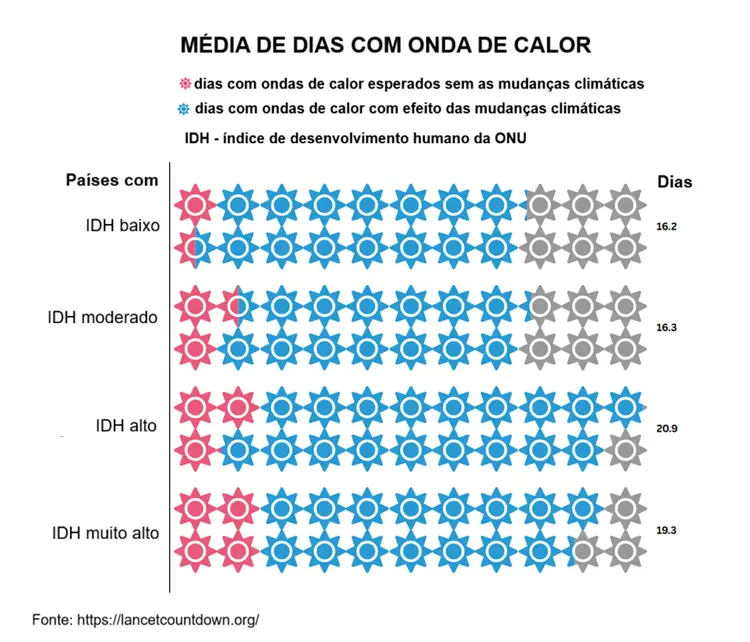
Average number of heat wave days x climate change x HDI (Source: https://lancetcountdown.org/)